Heated Airer vs Tumble Dryer: Which Costs Less to Run?
Cost per load and per year at the 26.32p per kWh price cap (1 October to 31 December 2026), using listed airer wattages and maker energy figures for real 8kg tumble dryers.
Quick answer
A 300W heated airer running for 6 hours uses 1.8 kWh, which costs about 47p a load at the Ofgem price cap of 26.32p per kWh (1 October to 31 December 2026). A full 8kg load costs about £1.24 in a condenser dryer, £1.27 in a vented dryer and 51p in an A++ heat pump dryer (38p for A+++). So a heated airer costs well under half as much as a condenser or vented dryer, but about the same as a heat pump dryer. It also releases the water into your room, so you may need to ventilate or run a dehumidifier.
Best heated clothes airers UKAt the Ofgem price cap rate of 26.32p per kWh (1 October to 31 December 2026), drying one load of washing can cost anything from about 31p to £1.27, depending on how you do it. We worked out the cost per load for heated airers and tumble dryers from real figures. For airers we used the listed wattage of the models in our best heated clothes airers UK guide. For dryers we used the energy figures Beko publishes for its 8kg heat pump, condenser and vented models.
In short, a heated airer is far cheaper than a vented or condenser dryer. A heat pump dryer comes close, though, and drying indoors has a hidden cost: the water ends up in your room. Want to try your own appliance and tariff? Use our appliance running cost calculator.
Heated airer vs tumble dryer: cost per load
Every figure below uses the price cap rate of 26.32p per kWh for 1 October to 31 December 2026. Your own rate is on your bill. Costs don't include the daily standing charge, because you pay that whether you dry clothes or not.
Heated airers
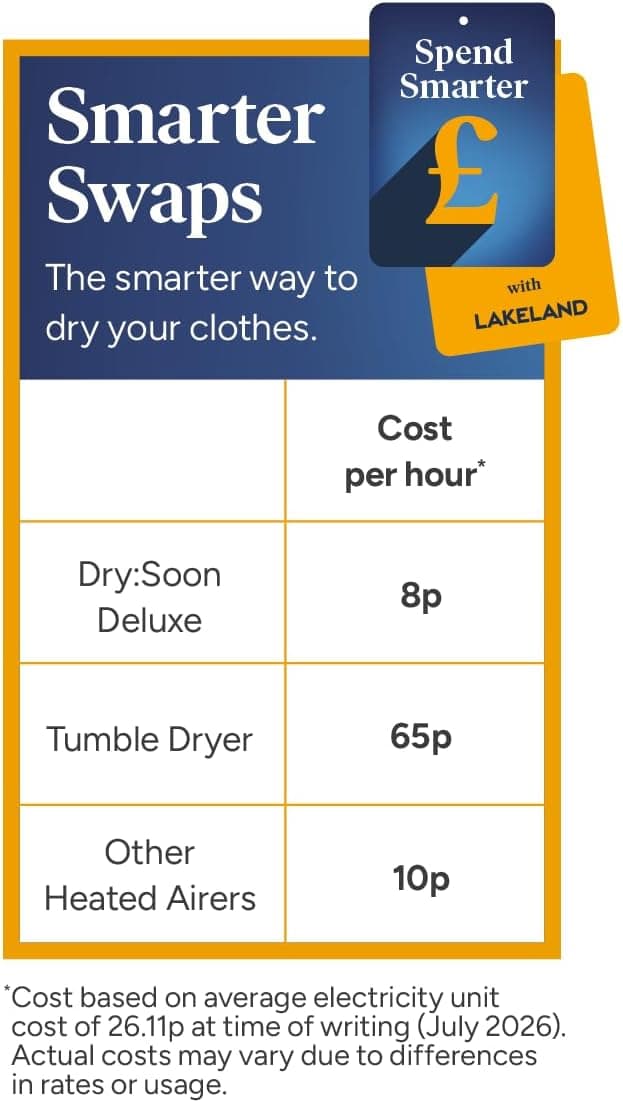
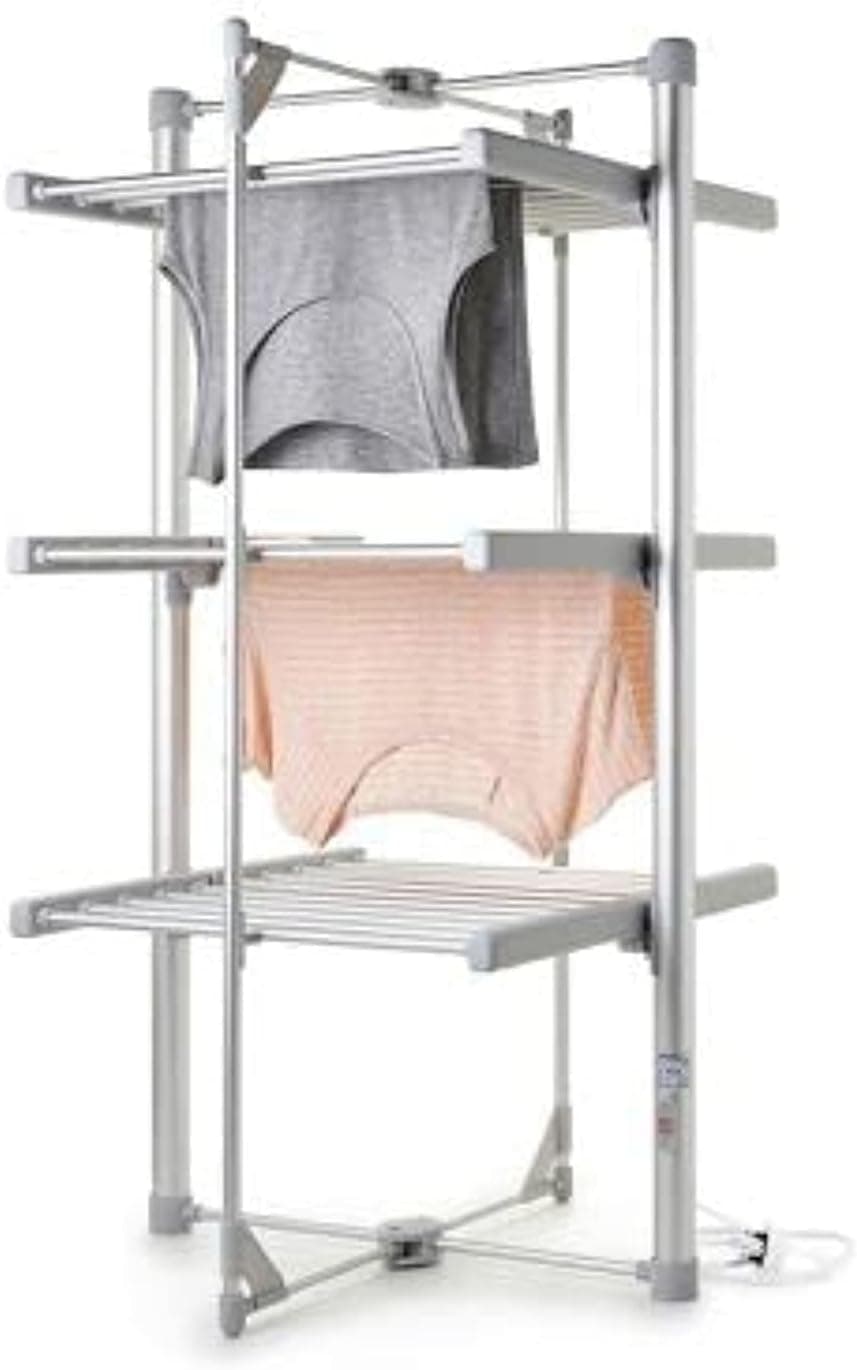
A full-size 3-tier tower of about 300W (the Dry:Soon Deluxe) costs 7.9p an hour. Running it for 6 hours uses 1.8 kWh, so that's about 47p a load. A load takes 4 to 8 hours depending on the fabric, the room and how full the rails are, which puts it between 32p and 63p.
Compact towers use less power. At about 198W (Dry:Soon Mini) or 220W (Daewoo 3-Tier), 6 hours costs 31p to 35p. Compare them in our heated airer for a small flat guide.
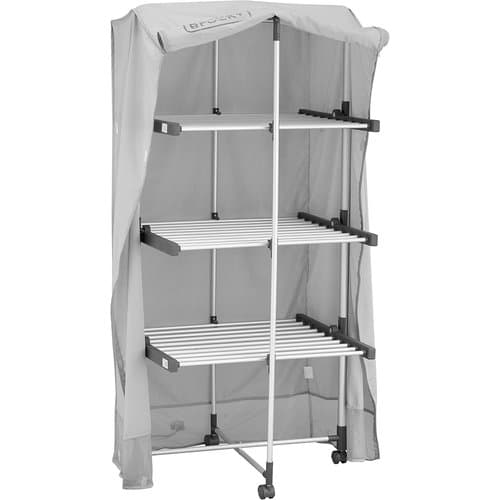
A heated drying pod blows warm air around clothes on hangers inside a cover. At about 1000W (the Dry:Soon Heated Drying Pod), it costs 26p an hour, or about 79p for a 3-hour load. Pods and covered towers are compared in our heated airer with cover guide.
These are worst-case figures at full power. Airers with a thermostat switch their heating on and off, so the real cost is often a little lower.
Tumble dryers
These are Beko's published energy figures for one full 8kg cotton load on the standard cotton programme. They're typical of new dryers in each energy class.
Heat pump, A+++: 1.44 kWh, about 38p a load. Heat pump, A++: 1.95 kWh, about 51p. Condenser, B: 4.73 kWh, about £1.24. Vented, C: 4.84 kWh, about £1.27.
A half load costs a little more than half the full-load price: about 21p and 28p for the two heat pump dryers, 67p for the condenser and 69p for the vented dryer. Older dryers can use more than these new models.
What drying three loads a week costs over a year
At three loads a week (156 loads a year) at today's rate: a 300W heated airer costs about £74, a 220W compact airer about £54 and a 1000W drying pod about £123. An A++ heat pump dryer costs about £80, a condenser dryer about £194 and a vented dryer about £199.
So swapping a condenser dryer for a 300W airer saves about £120 a year at three loads a week. Swapping an A++ heat pump dryer for the same airer saves only about £6.
Beko's own yearly figures, based on 160 cycles of mixed full and half loads, tell the same story: about £47 a year for the A+++ heat pump, £62 for the A++ heat pump, £148 for the condenser and £152 for the vented dryer.
Which should you use?
You have a vented or condenser dryer. Use a heated airer for everyday loads and keep the dryer for towels, bedding or a rush. Each load you move to a 300W airer saves about 77p.
You have a heat pump dryer. The running cost is close to an airer's, and the dryer keeps the water out of the room. Use whichever suits the day.
You have no dryer and a small flat. A compact airer is the cheapest option. Open a window or run a dehumidifier while it works, and see the heated airer for a small flat picks.
You want speed without a dryer. A 1000W drying pod is quicker than rails, but at about 79p a load it only beats condenser and vented dryers, not a heat pump dryer.
Compare towers, winged airers and pods in our best heated clothes airers UK guide.
How we worked it out
Cost is energy (kWh) multiplied by the unit rate. For airers and the dehumidifier, energy is the listed wattage divided by 1,000, multiplied by the hours they run. For dryers we used the maker's energy figure per load, because a dryer's power changes through the cycle.
The rate is the Ofgem energy price cap average Direct Debit electricity unit rate for England, Scotland and Wales, 26.32p per kWh for 1 October to 31 December 2026, checked on ofgem.gov.uk on 7 October 2026. Ofgem notes there's no VAT on electricity from 1 October 2026 to 31 March 2027. Dryer figures come from Beko's UK product pages for its 8kg A+++ and A++ heat pump, B condenser and C vented models. Airer wattages come from the listings in our heated airer guides.
Want to change the hours, wattage or rate? Use the appliance running cost calculator. For heaters and electric blankets, use the heater running cost calculator.
Why we give this advice
Costs are worked out from the Ofgem price cap rate (26.32p per kWh, 1 October to 31 December 2026), the listed wattage of the heated airers in our guides and Beko's published energy figures for 8kg tumble dryers. We have not metered these appliances ourselves.
Who it is for
- Anyone deciding between a heated airer and a tumble dryer on running cost
- Dryer owners wondering whether an airer would cut their bill
- Flat dwellers with no room or venting for a dryer
Who should skip it
- Large households drying several loads a day, where a dryer's speed matters more
- Homes with serious damp, where adding indoor moisture is a bad idea
Important limitations
- Costs exclude the standing charge and use the price cap average rate. Your tariff and region will differ.
- Airer figures assume full power for the whole time. Thermostats cycle, so real use is often lower.
- Dryer figures are new Beko models on a standard cotton programme. Other brands, older dryers and other programmes vary.
- Drying times depend on fabric, spin speed, load size and room temperature.
- Affiliate disclosure: Amazon UK Associates (topmagpie-20) may earn a commission on linked guides.
Frequently asked questions
1.Is a heated airer cheaper than a tumble dryer?
2.How much does a heated airer cost to run per hour?
3.How much does a tumble dryer cost per load in the UK?
4.Is a heat pump tumble dryer cheaper to run than a heated airer?
5.Do I need a dehumidifier with a heated airer?
Ready to choose a product?
This page stays problem-focused. Product rankings, approximate price bands and Amazon UK links live on the buying guide.
Best heated clothes airers UKRelated buying guides
 Guide
GuideBest Heated Clothes Airers UK
Towers, winged airers and drying pods compared, with listed wattages and running costs.
 Guide
GuideBest Heated Clothes Airer for Small Flat UK
The lowest-wattage compact towers, which are the cheapest way to dry a load.
 Guide
GuideBest Heated Airer with Cover UK
Covered towers and pods that dry faster, at a higher cost per hour.
 Guide
GuideBest Dehumidifier for Drying Clothes UK
Pull the water from airer-dried washing out of the room.
More winter advice
Affiliate disclosure: TopMagpie participates in the Amazon EU Associates Programme (store / tracking: topmagpie / topmagpie-20). Buying guides linked from this article may contain affiliate links; we may earn from qualifying purchases. This does not change our editorial selections.
Research note: This is a problem→answer editorial spoke, not a laboratory test report. We do not invent live prices. Product comparisons live on the linked money pages.